Shelf-Ready Packaging for Walmart: What CPG Brands Need to Know
Walmart is the largest grocery and general merchandise retailer in the country, and getting shelf-ready packaging right is one of the most overlooked ways CPG brands win — or lose — favor with the buyers who decide what stays in stores. Packaging that’s hard to identify, slow to open, or awkward to stock costs labor hours at store level and ultimately affect vendor scorecards. This guide walks through what Walmart-ready packaging actually requires, from structural engineering to print, so your next Walmart packaging placement can be a win.
What Is Walmart Shelf-Ready Packaging?
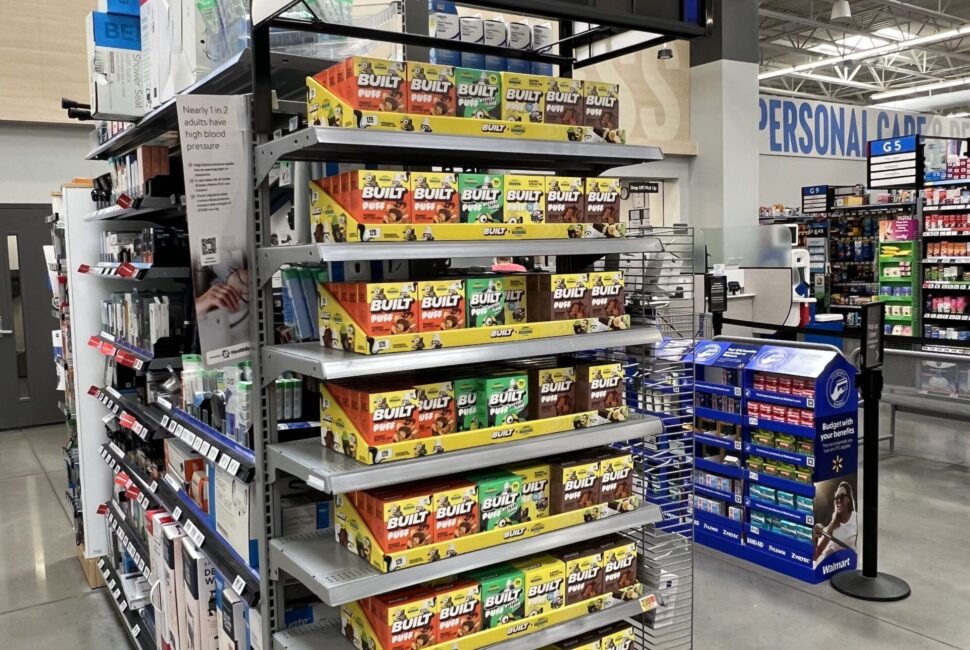
Shelf-ready packaging (SRP), sometimes called retail-ready packaging (RRP) or display-ready packaging, is a shipping case engineered to move from pallet to shelf with little or no extra handling. Instead of associates unboxing individual units and hand-placing them on shelves, the outer case itself becomes (or opens directly into) the display: pull a perforated top or front panel, and the case is ready to shop. Or like the image above, a tray that is easily ready to be presented on a Walmart endcap.
For Walmart specifically, this matters because of scale. Store teams are moving enormous volumes of products through limited labor windows, so any case that requires extra cutting, re-boxing, or guesswork slows the whole process. Walmart packaging requirements aren’t published as a single rigid spec sheet the way some retailers’ compliance manuals are, but buyers and store operations teams consistently reward suppliers whose packaging does not slow down the stocking process— and that predictability is what a good structural design delivers.
The Five Easies of Walmart Packaging
Retail-ready packaging across major big-box and club retailers is generally judged against five functional criteria, often called the “five easies.” They’re a useful checklist for any Walmart shelf-ready packaging project:
- Easy to identify — the SKU, brand, and product are recognizable at a glance, both in the backroom and on the shelf.
- Easy to open — a clean, low-effort opening method that doesn’t require a box cutter or risk damaging product.
- Easy to stock — the case slots directly into the shelf or display location with minimal repositioning.
- Easy to shop — once open, the case reads like a merchandised display, not a torn-open shipper.
- Easy to recycle or dispose of — the case breaks down flat or separates cleanly for backroom disposal.
Every structural and graphic decision in this guide traces back to one of these five criteria. If a design choice doesn’t clearly serve one of them, it’s worth questioning before it goes to production.
Shelf-Ready Trays vs. Display-Ready Cases
Two structures dominate Walmart shelf-ready packaging, and choosing the right one depends on the product and the merchandising location:
Shelf-ready trays are shallow, open-top or low-wall trays that hold product in a grid and slide directly onto a shelf. They’re common for shelf-stable grocery, health and beauty, and household items where the case sits among other trays in a normal shelf run.
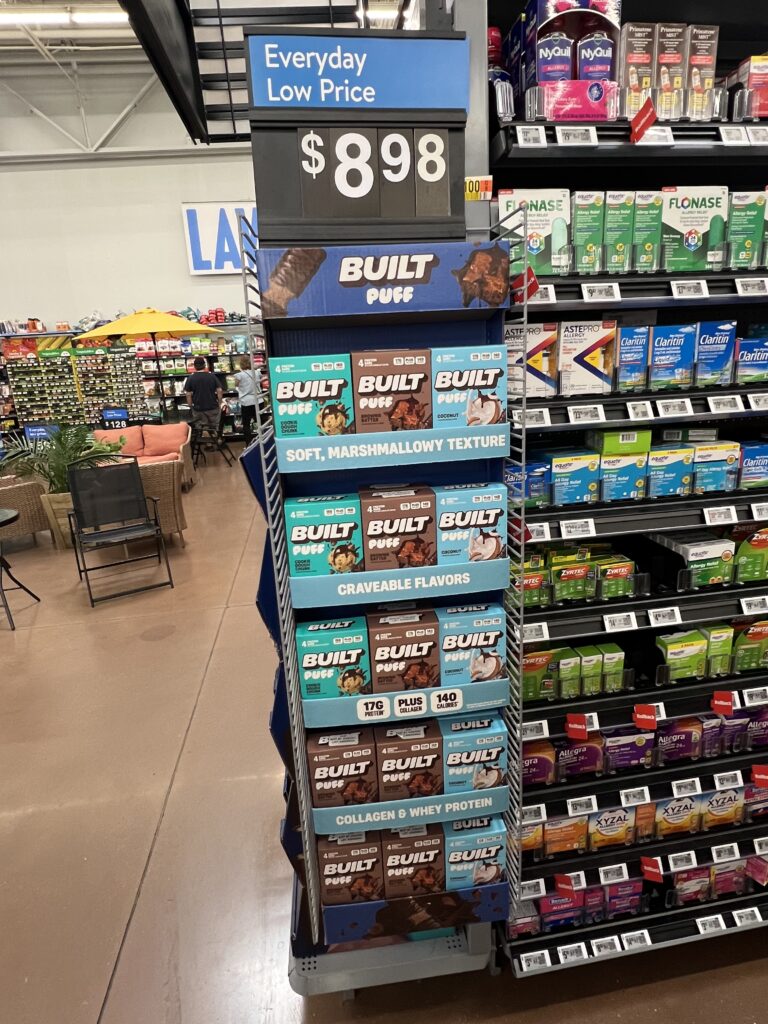
Display-ready cases (including PDQ displays) are taller, often free-standing units designed for secondary placement — end caps, power aisles, or floor stands. Walmart PDQ displays typically fold from a single blank into a merchandising unit with a header card or graphic face, giving the brand a stronger presence than a standard tray allows.
The decision usually comes down to where the buyer wants the product placed. Primary shelf placement favors the tray; incremental or promotional placement favors the PDQ or floor display. Either way, the case needs to hold its shape fully loaded and stack safely on a pallet before it ever reaches the sales floor.
Using Graphics to Improve Shelf Presence
Once the structure and opening are solid, graphics are what turn a corrugated structure into a selling tool. A few things worth prioritizing on Walmart corrugated displays:
Color accuracy across a full order. Buyers notice when the same SKU looks slightly different case to case. Consistent, repeatable color is a print quality issue as much as a design one.
Brand recognition at a distance. Shoppers scan aisles quickly; bold, high-contrast branding on the header or front panel helps the product register before someone’s even close enough to read copy.
Clean graphics after opening. Because the outer shipping graphics and the inner shelf-facing graphics often end up as different visible surfaces once the case is opened, both need to be designed intentionally.
Common Walmart Packaging Mistakes
A few recurring issues tend to show up in Walmart shelf-ready packaging that doesn’t perform well once it reaches stores:
Skipping a real-world stocking test. A case that looks right in a rendering can still be hard for a person who is merchandizing the store to actually lift, open, and place on a shelf. Packaging needs to
Oversizing the case “to be safe.” Extra board and extra cube cost money at scale and can hurt pallet efficiency.
Perforations that were never tested with real product weight in the case. What tears cleanly empty often doesn’t tear cleanly loaded.
Not dialing in how your products will be palletized and shipped. The best designs consider the whole supply chain and how to protect your products before they get to the store.
Inconsistent case counts or dimensions across SKUs in the same line. This creates friction during resets and can trigger compliance flags.
When to Use Digital Print vs. Flexographic Print
Print method affects both cost and turnaround, and the right choice depends on the order profile:
- Flexographic print remains the more economical choice for large, single-SKU production runs where the design won’t change for a while — high-volume core items are usually a good fit.
- Digital print makes more sense for glossy high graphic artwork, frequent SKU or seasonal graphic changes, test placements, or situations where a brand is rolling out several variants and doesn’t want the cost and lead time of new flexo plates for each one.
Brands preparing a Walmart launch often benefit from digital print early — while SKU counts, pack sizes, or promotional graphics are still being finalized — and can shift to flexo once volumes stabilize and designs lock in.
How DeLine Supports Brands Preparing for Walmart
DeLine Box & Display is a leader in retail packaging and has been in the industry since 1912. DeLine helps CPG brands moving into retail, club, and ecommerce channels by being the experts in what you need for your placement to become a success. Through DeLine Digital, our single pass digital press gives brands the flexibility to run shorter digital print jobs while a Walmart program is still taking shape, without sacrificing the color consistency buyers expect at full volume.
If you’re preparing a Walmart submission or reworking packaging that’s getting flagged in the field, we’re happy to look at your current case and talk through what’s working and what isn’t.
