
Why Digital Print Is the Future of Corrugated Packaging — Especially for Club and Retail
For brands competing for shelf space at Costco, Sam’s Club, Target, Kroger and other major retail chains, the pressure to deliver flawless, fast, and flexible packaging has never been higher. Digital print changes the game entirely.
What Flexo and Litho Were Built For
Flexographic printing has been the workhorse of corrugated packaging for decades. It is still a large part of our business that is great for limited colors and designs that are not going to change frequently. Flexo is fast, economical at large scale, and perfectly adequate for graphics that will not change frequently— think 1-5 color shipping RSC boxes, basic trays, and packaging that does not need to do much selling. Lithographic lamination (litho-lam) stepped up the quality game, printing on paper that’s then adhered to corrugated board, producing vivid retail-quality graphics.
Both methods share a fundamental constraint: they require plates. Plates cost money, take time to make, and must be remade every time your design changes. For a brand running a single SKU in millions of units, that tradeoff makes sense. But for CPG brands that need to change colors and flavors with the seasons (looking at you pumpkin spice and peppermint!) they may not have the time to wait for these set up costs.
The Future for Retail and e-Commerce is Digital Print. Period.
According to a recent article by Research and Markets, the digital print packaging market size is expected to see rapid growth in the next few years expanding to approximately $47.99 billion in 2030. The growth can be attributed to increased e-commerce packaging demand, growing investments in digital print technologies, and increasing regulatory focus on packaging sustainability. We have seen an increase in digital print sales within our business over the past few years, we believe with the age of social media and products going “viral” the need for brands to constantly level up their flavors and packaging continues to increase.
Why This Matters Especially for Club Stores and Retail Buyers
Club channels like Costco and Sam’s Club operate on different rules than traditional retail. Product sizes are different, packaging must do more merchandising work, and buyer approval cycles can be intense with very tight timelines. Brands are investing heavily in endcap displays, full pallet packaging options, or refrigerated trays, and packaging suppliers need to create displays that not only protect the products, but embody the hard work it took to get that retail real estate in stores. Here’s where digital print earns its keep for packaging buyers specifically targeting these channels:
Sampling and Sell-In Kits
Need 50 units of a new club pack for a buyer presentation? Digital print makes short-run sampling economical — no plates, no minimums.
Speed to Shelf
No plate-making delays. When a promotional window opens or a buyer greenlights a launch, your packaging can move from artwork to production in days, not weeks.
Seasonal and Regional Variants
Run holiday packaging alongside standard SKUs. Print east coast and west coast versions simultaneously — same press run, different artwork, zero extra setup cost.
Compliance-Ready Artwork
Retail partners change compliance requirements. With digital, updating a nutrition panel, barcode, or regulatory copy costs nothing and takes hours — not a new plate order.
Lower Inventory Risk
Order what you need when you need it. Stop warehousing obsolete packaging inventory that represents tied-up capital and potential waste.
PDQs and Floor Displays
Club stores and big-box retail rely heavily on pre-built display-ready packaging. Digital print delivers vibrant graphics on PDQs and shipper displays that sell to shoppers.
Print Quality: Closing the Gap for Good
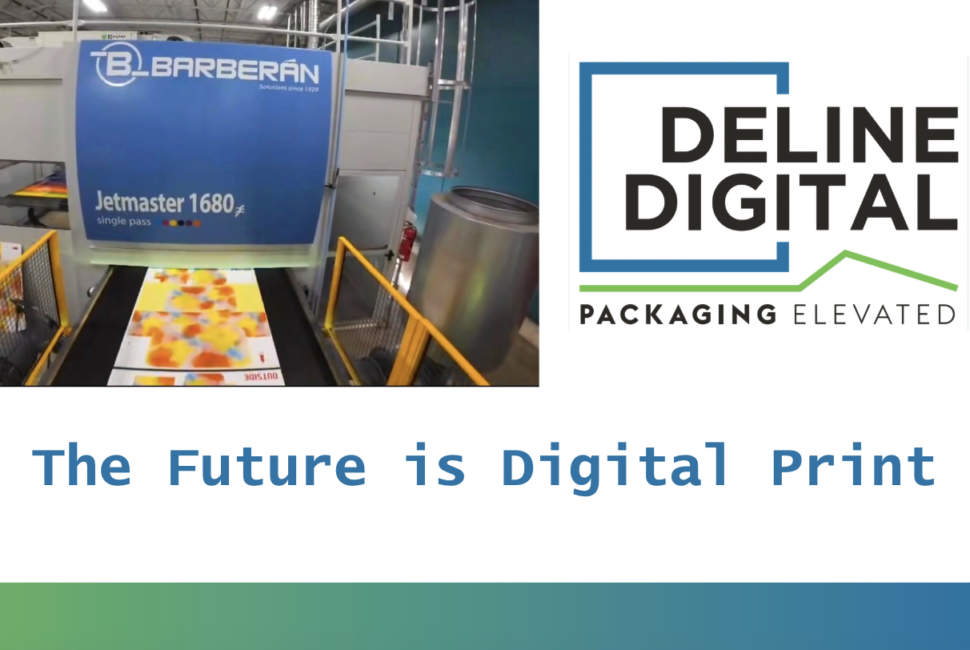
A common misconception is that digital print means lower quality. That’s simply no longer true. DeLine Digital’s Barberán inkjet press delivers true photographic reproduction directly onto corrugated board — no lamination required, no middleman substrate, no delamination risk. We’re talking rich color gamut, sharp text, and retail-grade imagery that holds up under warehouse and shelf conditions.
For brands where packaging is a primary marketing surface — and in club retail, it absolutely is, because there are no sales associates and the box does all the selling — print quality is non-negotiable. Digital now clears that bar with ease.
Sustainability: A Bonus You Didn’t Expect
Traditional methods produce significant waste in plate-making, make-ready sheets, and press startup. Digital printing produces virtually no make-ready waste and eliminates the chemicals associated with plate production. For brands with sustainability commitments to retail partners or corporate mandates, digital print is the cleaner choice — and one you can credibly communicate on your packaging.
Who Should Be Talking to DeLine Digital Right Now
If any of the following apply to your brand, the conversation is overdue:
You’re preparing for a club store launch and need sell-in samples plus a fast first production run. You’re managing more than 3 SKUs and tired of plate costs multiplying with every new design. You operate in seasonal categories and need to move quickly on holiday or promotional packaging. You’ve had artwork compliance updates cause costly reorders. You’re forecasting tightly and can’t afford to commit to large inventory runs upfront.
Digital print doesn’t replace every method for every application — but for CPG brands navigating the velocity and complexity of modern retail, it should be your default starting point for corrugated boxes, club store pallets and trays, and in-store shippers + retail displays.
